Blue Tongue Solutions brings enterprise-grade project and change management expertise to UK SMEs — at an accessible price point, with measurable results.
Not because of the technology — because organisations treat change as an IT project rather than a business initiative. We fix that.
65%+
UK SMEs have initiated digital transformation
9.32%
Annual market growth in change consulting (CAGR)
Expertise in
Digital TransformationAI Adoption & GovernanceMicrosoft 365 MigrationsHybrid Working StrategyMerger IntegrationOperational Resilience
What We Do
Strategic change, not just technology deployment
Three interconnected practice areas, each addressing a critical challenge facing UK SMEs right now.
Digital Transformation
We help SMEs move beyond the hype and into measurable value. From Microsoft 365 rollouts to full digital workplace redesigns, we lead the people and process change that makes technology investments pay off.
43% of UK SMEs have no AI adoption plan. We help you get ahead of shadow AI, build governance frameworks, identify viable use cases, and bring your workforce on the journey — before the risk escalates.
AI ReadinessGovernance FrameworksWorkforce ReskillingUse Case Discovery
Hybrid Working & Operational Change
We help organisations redesign physical spaces, technology stacks, and policies to build genuinely productive, inclusive hybrid environments — plus operational resilience and business continuity programmes.
The SME change management gap is real — and growing
UK SMEs are under pressure to transform. But enterprise firms are too expensive and too slow. That's the gap Blue Tongue Solutions fills.
1
Expert-led, not junior-staffed
Every engagement is led by a senior practitioner with hands-on enterprise programme experience — never delegated to graduates following a methodology.
2
Outcome-focused, not hours-focused
We tie success criteria to your business outcomes. If your people aren't adopting the change, the project isn't done.
3
Built for SMEs, not adapted from enterprise
Governance, pace, and budgets that work for a 50-person firm — not scaled-down versions of FTSE 100 frameworks.
4
We reduce your dependency, not grow it
We build internal capability as we deliver. When we leave, your team can run the next programme without us.
Market Snapshot
UK SMEs who have started digital transformation65%+
SMEs with no AI adoption plans43%
UK workers now on hybrid contracts28%
Change consulting annual growth (CAGR)9.32%
Transformation programmes that fail70%
How We Work
A delivery approach built on real outcomes
Six principles that define every Blue Tongue Solutions engagement.
Deep stakeholder engagement
We start by understanding the business drivers, risks, and internal politics — not by opening a project plan template.
Change impact assessment
Workforce readiness planning is built into every engagement from day one — not bolted on at the end.
Clear governance from the outset
Risk frameworks, RACI matrices, and decision-making structures established before a single workstream kicks off.
Training & adoption embedded
User adoption support and training design are never optional extras — they're part of the core delivery model.
Measurable business outcomes
Success criteria tied to tangible metrics — productivity, adoption rates, risk reduction — not project milestones.
Reducing dependency over time
We build capability in your team so that every engagement leaves you stronger and more self-sufficient than before.
Christian Gemson
Founder & Director
● Founded August 2015
About the Founder
Enterprise experience. SME accessibility.
Christian Gemson is a senior project and change management practitioner with a track record of delivering enterprise-grade programmes across complex, regulated, and fast-moving organisations.
Blue Tongue Solutions was founded in 2015 on a simple belief: SMEs deserve access to the same quality of change expertise as large enterprises — without the overhead, the bureaucracy, or the inflated day rates.
Programmes delivered span operational resilience, digital workplace transformation, merger integration, hybrid working strategy, and AI governance — always with a focus on lasting adoption, not just delivery milestones.
Operational Resilience
Microsoft 365 Migrations
Digital Workplace
Merger Integration
AI Strategy & Governance
Hybrid Working Transformation
Stakeholder Engagement
Business Continuity Planning
Let's Talk
Ready to make your next programme actually land?
Whether you're navigating a digital transformation, getting ahead of AI adoption, or rethinking how your teams work — Blue Tongue Solutions can help.
Over 65% of UK SMEs have started a digital transformation programme. Fewer than a third achieve the outcomes they set out to deliver. The gap isn't technology — it's change management.
70%
of digital transformations fail to meet objectives
2x
longer and costlier than anticipated, per Gartner research
53%
of organisations are untested in digital readiness (Gartner, 2023)
65%+
UK SMEs have initiated some form of digital programme
The Core Problem
Technology is the easy part
The majority of digital transformation failures have little to do with the technology chosen. Research consistently finds that fewer than 30% of digital transformations achieve their target outcomes — and the primary causes are almost always organisational: resistance to change, lack of leadership alignment, insufficient training, and poor stakeholder engagement.
Gartner's research reinforces this picture starkly. Their analysis of digital transformation programmes found that the journey takes large enterprises at least twice as long and costs twice as much as originally anticipated. More concerning still, 53% of organisations surveyed were found to be untested in the face of digital challenge — meaning their readiness for transformation was genuinely uncertain before they began.
SMEs face a compounded challenge. They lack the dedicated change management resource that large enterprises take for granted, yet they're expected to navigate complex platform migrations, cultural shifts, and process redesigns simultaneously — often while keeping the day job running.
"The transformation journey is taking large enterprises especially at least twice as long and costing twice as much as they originally anticipated — in large part due to cultural readiness."
— Gartner, The IT Roadmap for Digital Business Transformation (2023)
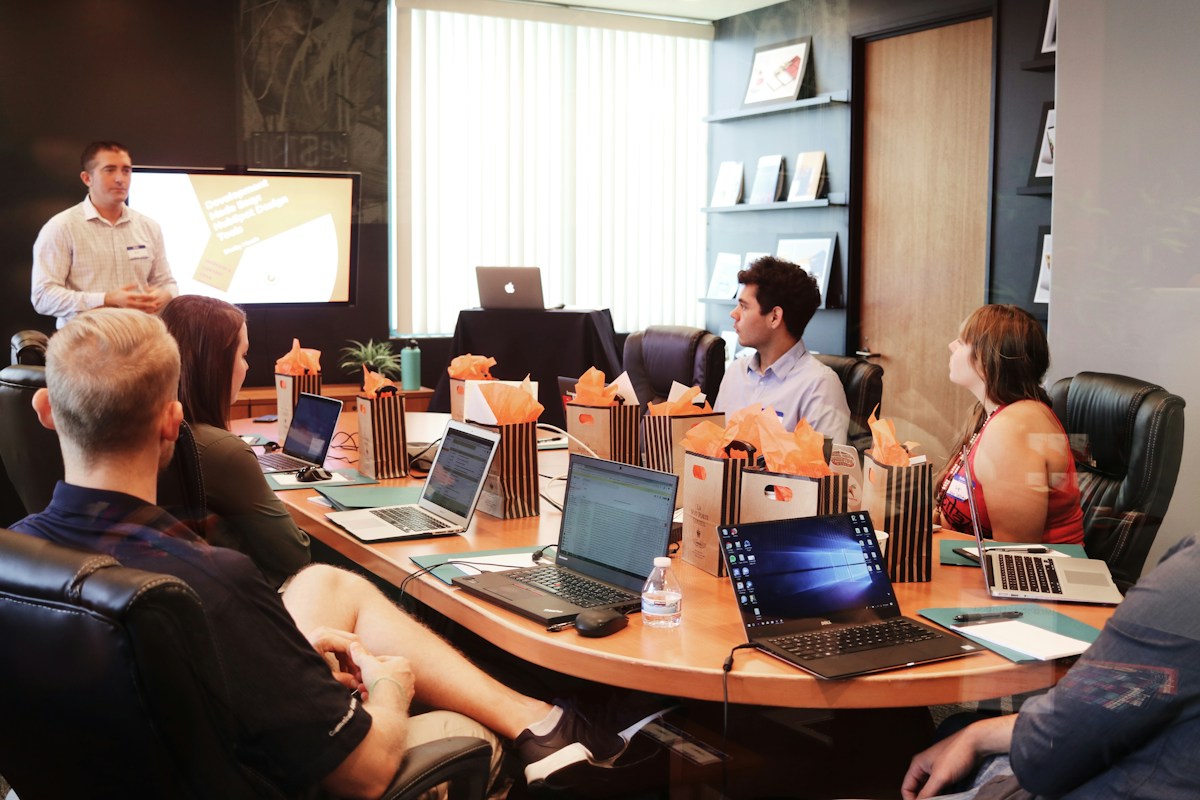
Source: Unsplash — collaborative digital work environments
Research & Evidence
What the evidence tells us
We've pulled together a selection of research, reports and talks that provide useful context and background on digital transformation — the scale of the challenge, where organisations tend to get it wrong, and what good looks like.
UK Government Report
SME Digital Adoption Taskforce: Final Report
UK Dept for Business & Trade, July 2025
The definitive UK government report on SME digital adoption. Finds that even a 1% productivity uplift across SMEs could add £94 billion annually to UK GDP — but most SMEs still lack the change capability to achieve it. Sets the ambition for UK SMEs to be the most digitally capable in the G7 by 2035.
Digital Transformation in SMEs: Overcoming the High Failure Rate
Xu, Yuan et al. — AMCIS 2024
Peer-reviewed research confirming the 70% failure rate in digital transformation. Identifies the root cause as organisational rather than technical — SMEs focus on cost reduction over business change, and lack the human capital to manage transformation effectively. Directly validates the Blue Tongue Solutions approach.
2025 Digital Transformation Challenges for UK SMEs
Aecor Digital, 2025
UK-specific analysis showing over 65% of UK SMEs have started digital transformation but most struggle to generate value. Legacy systems, cultural resistance, and the absence of structured change management are the primary barriers — not the technology itself. Directly relevant to every Blue Tongue engagement.
Sinek's argument that psychological safety is the precondition for any successful change maps directly to transformation programmes. People adopt change when they feel safe failing — not when they're threatened with it.
The definitive framework for organisational change. Kotter's 8-step model — from establishing urgency to embedding change in culture — is the foundation of Blue Tongue Solutions' delivery methodology.
The IT Roadmap for Digital Business Transformation
Gartner, 2023
Gartner's definitive framework for digital transformation, based on research across thousands of organisations. Finds that transformation journeys take at least twice as long and cost twice as much as anticipated — primarily due to cultural readiness gaps. Their five-stage roadmap (Ambition, Design, Deliver, Scale, Refine) forms the backbone of the Blue Tongue Solutions delivery model.
Three minutes that capture the essence of change adoption — why real transformation happens when leaders nurture early adopters rather than mandating change from the top. Every Blue Tongue engagement identifies internal champions early: the people who become the movement, not just the recipients of it.
Gartner's IT Roadmap for Digital Business Transformation identifies five sequential stages that every successful programme moves through. Blue Tongue Solutions uses this framework as the backbone of every engagement — ensuring nothing is skipped and no stage is treated as optional.
1
Ambition
Strategy defined, excitement generated
2
Design
Options assessed, plan developed
3
Deliver
Proof of concept executed
4
Scale
Plan commercialised, absorbed
5
Refine
Assess, optimise, reevaluate
Framework source: Gartner, The IT Roadmap for Digital Business Transformation (2023). Blue Tongue Solutions is not affiliated with or endorsed by Gartner.
Our Approach
How Blue Tongue Solutions delivers digital transformation
1
Discovery & stakeholder mapping
We start with a structured discovery phase — understanding the business case, the political landscape, and the human impact before any workstream planning begins.
2
Change impact assessment
A detailed analysis of which roles, teams, and processes are affected — and how ready they are for change. This shapes our engagement and training strategy.
3
Governance & delivery structure
We establish the right project governance — steering group, RACI, decision log, risk register — scaled to your organisation's size and complexity.
4
Adoption-led delivery
Every milestone includes adoption metrics. We don't sign off a deployment until users are actively using the technology and confident in it.
5
Capability handover
Before we exit, we ensure your team can sustain and build on what's been delivered — documentation, internal champions, and a clear roadmap for what's next.
"Digital transformation is not about technology — it is about strategy and new ways of thinking."
— David Rogers, The Digital Transformation Playbook, Columbia Business School
Ready to make your digital programme land?
Talk to us about your transformation — no obligation, no jargon.
AI tools are already part of everyday working life — your people are using them whether you have a plan or not. The opportunity for SMEs isn't to become AI experts. It's to adopt the right tools, in the right way, with the right guardrails — so your business gets the productivity benefits without the risk.
65%
of employees excited to use AI at work — yet most lack a strategy (Gartner, 2025)
37%
don't use AI because colleagues aren't — peer behaviour drives adoption (Gartner, 2025)
27%
of executives have a comprehensive AI strategy (Gartner, 2026)
20%
believe their workforce is truly AI-ready (Gartner, 2026)
The Shadow AI Problem
Your employees are already using AI — the question is whether it's working for you
The British Chambers of Commerce found that AI adoption among UK SMEs has risen to 54% — but most are using generic tools like chatbots and writing assistants in an ad hoc way, without any strategy, training or policy around it. That's not a problem to solve by banning tools. It's an opportunity to shape how AI becomes part of how your business operates.
Blue Tongue Solutions doesn't position AI adoption as a technical challenge — it's a people and process challenge. The businesses getting real value from AI are the ones that have thought through which tools to use, trained their teams properly, and built simple policies that make adoption confident rather than cautious. That's exactly what we help SMEs do.
"AI deployment decisions are being made without any involvement of HR — leading to poor adoption, misaligned expectations between employees and executives, and organisations not realising significant business value from AI."
— Gartner HR Survey, December 2025
AI adoption requires strategy, governance and workforce change — not just tooling
Research & Evidence
Context and background on AI adoption
A selection of research, reports and talks that help explain where AI adoption is heading, what UK businesses are actually doing, and why getting the people and process side right matters as much as the technology.
UK Research Report
Powering Productivity: AI and the Future of UK Work
British Chambers of Commerce & University of Essex, 2026
The most current UK-specific research on AI in the workplace. Finds AI adoption among UK SMEs has risen to 54% — but most are using simple tools like chatbots and writing assistants without strategy or training. The gap is not technology access: it is knowing how to embed AI into everyday working practices effectively.
The clearest articulation of AI as an everyday productivity tool rather than a threat. Khan's framing — AI as a personal assistant for every worker — is exactly the mindset shift Blue Tongue Solutions helps SME teams make: from anxiety about AI to practical, confident use of it in their day-to-day roles.
CIPD's landmark UK research into responsible AI adoption in the workplace — led with the government's Innovate UK BridgeAI programme. Focuses on how people management, workforce development, and organisational culture determine whether AI delivers real productivity gains or simply creates new risks for employees.
People-Centric AI Strategy: Gartner HR Survey Findings
Gartner, December 2025 & May 2026
Gartner's latest research finds that 65% of employees are excited to use AI — yet only 27% of executives have a comprehensive AI strategy and just 20% believe their workforce is genuinely AI-ready. Critically, 37% of employees who could use AI don't, because their colleagues aren't — meaning adoption is a cultural and change management challenge, not a technology one.
The Wonderful and Terrifying Implications of Computers That Can Learn
Jeremy Howard — TED, 2014 · 3M+ views
An accessible, non-technical explanation of how machine learning works and why the opportunity is for every business, not just tech companies. Perfect for SME leaders who want to understand AI without a computer science degree — the right starting point before any adoption conversation.
The UK Government's national blueprint for AI adoption — directly relevant to SMEs. Makes clear that productivity gains from AI will only be realised if businesses have the support to adopt it with proper workforce preparation. Blue Tongue Solutions exists to provide exactly that support to SMEs who lack in-house capability.
Sets the UK Government's ambition for SMEs to become the most AI-confident in the G7 by 2035. A practical, grounded read — not a technology manifesto. Identifies that SMEs have historically been slow to turn awareness of new tools into business application, and sets out the support framework to change that.
Gartner predicts that by 2027, 50% of enterprises without a people-centric AI strategy will lose their top AI talent. Their research is clear: the organisations getting real value from AI are those that treat it as a workforce and change challenge — not a technology deployment. That is precisely the lens Blue Tongue Solutions brings to every AI engagement.
Source: Gartner, May 2026. Blue Tongue Solutions is not affiliated with or endorsed by Gartner.
Our Approach
Getting your business AI-ready
1
Understand where you are today
We start by mapping how AI is already being used across your business — and identifying where the real productivity opportunities are hiding.
2
Identify the right tools for your business
Not every AI tool is right for every business. We help you cut through the noise and identify the specific tools that will genuinely improve how your teams work — and which ones to avoid.
3
Build simple, practical policies
Clear, lightweight guidelines on how AI should and shouldn't be used in your business — protecting your data and your reputation without creating bureaucracy.
4
Train your people with confidence
Hands-on training that gives your team the skills and confidence to use AI tools effectively in their everyday work — focused on practical application, not theory.
5
Measure impact and build momentum
We track the productivity gains, gather feedback, and help you build on early wins — so AI adoption becomes part of how your business continuously improves.
"AI will not replace managers. But managers who use AI will replace those who don't."
— Harvard Business Review, 2024
Ready to get ahead of AI in your business?
Let's talk about where you are today and where you need to be.
The pandemic forced the world into remote work. The years since have revealed something more complex: hybrid working done well is transformative. Hybrid working done badly is exhausting, inequitable, and costly. Most organisations are still figuring out which one they have.
39%
of global knowledge workers now hybrid — Gartner forecasts this continuing to rise
75%
of hybrid workers want to co-create their working model — not have it imposed (Gartner, 2023)
23%
of digital workers satisfied with their work applications — down from 30% in 2022 (Gartner, 2024)
28%
of UK workers now splitting time between home and office (ONS, 2024)
The Real Challenge
Hybrid is a strategy problem, not a scheduling problem
Most organisations approached hybrid working as a logistics exercise — who comes in on which days, and how many desks do we need. The result has been inconsistent experiences, equity gaps between remote and in-office employees, management capability shortfalls, and cultures that are silently fraying.
The organisations thriving in hybrid environments have done the harder work: redesigning how they collaborate, invest in their physical spaces as purposeful hubs, retrained managers, and defined clear cultural norms that work regardless of location.
"Three-quarters of digital workers want to participate in creating their hybrid work model — yet most organisations still design hybrid policies without meaningful employee input."
— Gartner Digital Worker Experience Survey, 2023
Purposeful workspace design is central to successful hybrid transformation
Research & Evidence
Context and background on hybrid working
Useful research, reports and talks that set out where hybrid working is now in the UK, what the legislation means for your business, and what genuinely productive hybrid environments look like in practice.
Gartner Research
Digital Worker Experience & Hybrid Work Findings
Gartner, 2023–2025
Gartner's research across thousands of digital workers finds that 75% want to co-create their hybrid working model — yet most organisations still design policy top-down. A separate 2024 survey of 5,141 employees found only 23% are satisfied with their work applications, down from 30% in 2022. The message is consistent: hybrid working requires deliberate design, employee involvement, and better technology to deliver its potential.
The most current UK research on hybrid working from the Chartered Institute of Personnel and Development. Finds 74% of UK organisations now have a hybrid policy — but only where hybrid is actively managed do employers report the productivity and retention benefits. A direct evidence base for the Blue Tongue Solutions approach.
The definitive UK guidance on flexible working rights following the Employment Relations (Flexible Working) Act 2023 — giving employees the right to request flexible working from Day 1. Essential reading for any SME reviewing working policies, and a practical starting point for structuring your hybrid model on solid legal ground.
Pink's research on autonomy, mastery, and purpose as the drivers of performance is foundational to hybrid working strategy. Flexible working works when it increases autonomy — and fails when it's just a different form of presenteeism.
The definitive strategic framework for hybrid working, by one of the world's leading management thinkers. Gratton's core argument — that organisations must redesign around tasks and outputs, not locations — underpins the Blue Tongue Solutions approach to every hybrid working engagement. A must-read for any SME leader navigating this transition.
Fried's provocative argument that offices are the enemy of deep work resonates powerfully in the hybrid era. His case for asynchronous, distraction-free working informs how we advise clients on workspace and collaboration redesign.
CIPD's formal submission to a parliamentary inquiry on hybrid working. Finds that 71% of employers offering hybrid working report improved talent attraction and retention — but also identifies significant inclusion risks for women and junior staff that require active management. A critical read for any SME building a fair hybrid model.
Gartner's 2025 Planning Guide for the Digital Workplace identifies improving digital employee experience and AI governance as the two defining priorities for organisations managing hybrid teams. Their research is consistent: organisations that invest in designing the hybrid experience — rather than leaving it to drift — significantly outperform those that don't on productivity, engagement and talent retention.
Source: Gartner 2025 Planning Guide for the Digital Workplace. Blue Tongue Solutions is not affiliated with or endorsed by Gartner.
Our Approach
Designing a hybrid model that works
1
Current state assessment
We audit your current working patterns, culture, spaces, and technology stack — identifying the gaps between your stated hybrid policy and the lived experience of your people.
2
Workforce & leadership engagement
We engage employees and managers to understand what's working and what isn't — ensuring the future model reflects the reality of your workforce, not just the preferences of the senior team.
3
Workspace & technology redesign
Physical spaces reimagined as collaboration hubs. Technology stacks assessed and optimised for distributed teams. Policies that reflect how work actually happens.
4
Manager capability building
Hybrid working lives or dies by management. We invest in building the skills to manage by output, support wellbeing at a distance, and build inclusive team cultures across locations.
5
Cultural embedding & continuous improvement
We establish feedback loops and review checkpoints — ensuring your hybrid model evolves with your business rather than fossilising at the point of rollout.
"The future of work isn't remote or office. It's intentional. The winners will be organisations that design their hybrid model deliberately — not those that let it happen by default."
— Blue Tongue Solutions, 2025
Ready to redesign how your people work?
Let's talk about your hybrid challenge — from strategy to implementation.